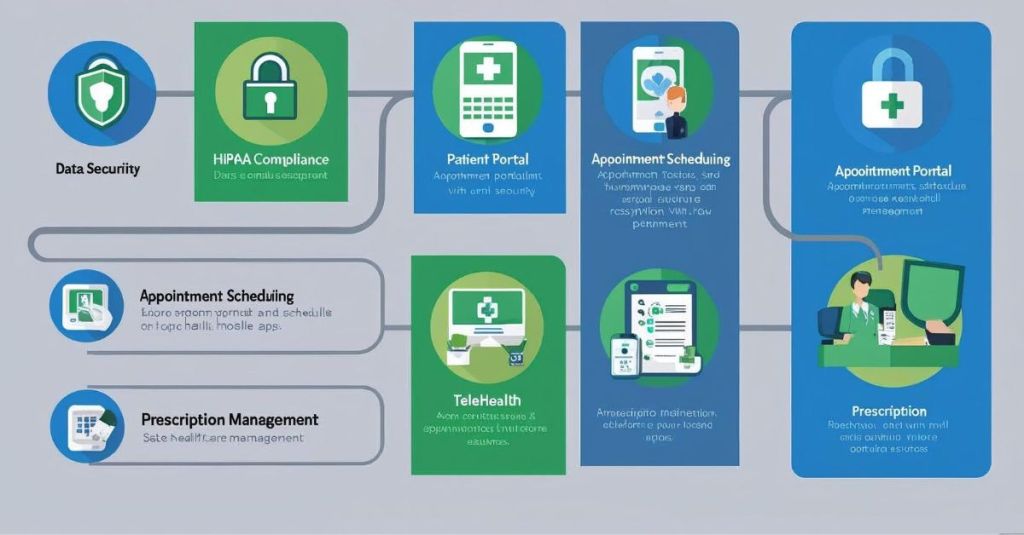
Healthcare mobile apps have transformed the way healthcare services are delivered. With the rapid advancement of mobile technology and the increased usage of smartphones, healthcare applications have become an essential tool for both healthcare providers and patients. These apps offer a wide range of features that help improve healthcare delivery, from appointment scheduling and telemedicine services to managing health data and medication adherence. The convenience of having access to healthcare services on the go has made these apps indispensable in today’s fast-paced world.
As healthcare professionals continue to embrace digital solutions, it’s crucial for app developers to focus not only on functionality but also on security and regulatory compliance. Patients entrust healthcare apps with sensitive personal health data, so ensuring that these apps comply with stringent regulations is non-negotiable. From safeguarding patient information to adhering to government regulations, healthcare apps need to meet a variety of requirements to protect user data and maintain trust.
For healthcare apps to be truly effective, they must offer a user-friendly experience, powerful features, and robust security. Developers must carefully design apps that are intuitive for users, especially since many may not be tech-savvy. Additionally, integrating features that enhance patient engagement and improving communication between patients and healthcare providers are essential for the app’s success.
However, the responsibility doesn’t stop at providing useful features. Compliance with key regulations such as HIPAA, GDPR, and FDA requirements is critical. Without proper compliance, an app can face legal consequences, loss of user trust, and even potential business closure. This blog explores the key features that make healthcare mobile apps effective and the compliance requirements developers must adhere to in order to ensure privacy, security, and legal safety for both healthcare providers and their patients.
Key Features of Healthcare Mobile Apps
User-friendly Interface
A user-friendly interface is crucial for the success of any healthcare mobile app. The simpler and more intuitive the design, the easier it will be for patients and healthcare professionals to navigate. An easy-to-use interface can enhance patient engagement and increase adoption rates.
- Simple navigation: Essential for users with varying technical expertise.
- Clear instructions: Guides users through tasks such as scheduling or accessing health records.
- Customizable features: Allow users to adjust settings based on personal preferences.
Data Security and Privacy
In healthcare, patient data is highly sensitive. Ensuring privacy and security is not only essential for trust but also legally required. HIPAA compliance, encryption, and secure login methods help protect user information from unauthorized access.
- HIPAA compliance: Essential for any healthcare app in the U.S. to ensure patient data privacy.
- Encryption: Data must be encrypted both at rest and in transit to prevent breaches.
- Secure logins: Multi-factor authentication is a must for accessing sensitive data.
Appointment Scheduling and Reminders
Appointment scheduling is one of the most useful features in healthcare apps. It streamlines patient management and reduces administrative workload for healthcare providers. Integration with calendars and reminders ensures that patients never miss important appointments.
- Ease of booking: Allows users to quickly schedule, reschedule, or cancel appointments.
- Automatic reminders: Helps reduce no-shows and keeps patients informed about upcoming visits.
- Synchronization with calendars: Syncs appointments with personal calendars for better organization.
Telemedicine Capabilities
Telemedicine has grown rapidly, especially in the wake of the COVID-19 pandemic. Virtual consultations allow healthcare providers to see patients remotely, offering convenience and broadening access to care. Integrating video and chat functions can make telemedicine seamless and secure.
- Real-time video consultations: Enables healthcare providers to assess patients remotely.
- Secure communication: Ensures private conversations and data transfer during consultations.
- Accessibility: Allows patients in rural or underserved areas to access quality care.
E-Prescriptions and Medication Management
Healthcare apps with e-prescription features allow doctors to send prescriptions directly to pharmacies. This improves efficiency and reduces medication errors. Medication management tools also help patients track their prescriptions and ensure proper adherence.
- Direct prescription sending: Reduces errors and increases convenience for patients.
- Medication reminders: Alerts users when it’s time to take their medications.
- Medication tracking: Helps patients keep track of their prescriptions and refills.
Integration with Wearable Devices
Wearable devices such as fitness trackers and smartwatches collect real-time health data. Integrating these devices with healthcare apps provides a comprehensive view of a patient’s health, offering personalized insights and improving care management.
- Real-time monitoring: Continuously tracks vital signs like heart rate, steps, and sleep patterns.
- Data accuracy: Ensures the app receives reliable data for better diagnosis and treatment plans.
- Personalized health insights: Uses collected data to provide custom health tips and advice.
Compliance Requirements for Healthcare Mobile Apps
HIPAA Compliance
HIPAA (Health Insurance Portability and Accountability Act) sets the standard for protecting patient data in the U.S. A healthcare mobile app must comply with HIPAA regulations to ensure patient privacy and secure data handling.
- Data protection: Healthcare apps must have robust security features to protect patient information.
- Audits and reporting: Regular audits should be performed to ensure compliance with HIPAA standards.
- Training for staff: Healthcare providers must train staff on HIPAA requirements to ensure proper handling of patient data.
GDPR (General Data Protection Regulation)
For healthcare apps in the European Union, compliance with GDPR is mandatory. This regulation sets guidelines for collecting and processing personal data, including patient information. Developers must be transparent about data collection and obtain explicit consent from users.
- Data consent: Patients must explicitly agree to the collection of their personal health data.
- Right to be forgotten: Patients have the right to request the deletion of their personal data from the system.
- Data transparency: Healthcare apps must provide clear information about how data is used and stored.
FDA Regulations
If a healthcare app qualifies as a medical device, it must comply with FDA regulations. Apps that perform clinical functions, such as diagnosing or monitoring health conditions, may need FDA approval to ensure safety and efficacy.
- Medical device classification: Apps must be categorized as medical devices if they have a clinical function.
- FDA approval: Certain apps may require premarket approval to verify their safety and effectiveness.
- Ongoing compliance: Apps need to comply with FDA standards throughout their lifecycle.
Local and International Regulations
Healthcare apps must adhere to local laws, which can vary by country. Some countries may have stricter data protection laws or specific regulations for telemedicine and medical apps. Understanding and complying with local regulations is crucial for global app deployment.
- Regional variations: Different countries may have unique requirements for healthcare apps.
- Global compliance: Apps that operate in multiple countries must ensure compliance with various healthcare regulations.
- International certifications: Developers may need certifications for specific markets.
Security Standards and Data Encryption
Ensuring the security of healthcare data is critical to prevent unauthorized access. Implementing robust security standards, including data encryption, secure communication, and compliance with global security protocols, helps protect sensitive health information.
- Data encryption: Ensures patient data is secure both in transit and at rest.
- Compliance with global standards: Apps must meet international security standards such as ISO/IEC 27001.
- Secure communication: Communication channels must be encrypted to protect sensitive conversations between patients and providers.
Conclusion
Healthcare mobile apps are revolutionizing the healthcare industry by enhancing patient engagement, improving care efficiency, and providing more convenient access to healthcare services. However, to develop a successful app, developers must focus on integrating essential features and ensuring compliance with regulations like HIPAA, GDPR, and FDA standards.For those looking to build a healthcare app, partnering with a trusted healthcare app development company is crucial.
 Think AI
Leave a comment